
Championship Oak-Smoked Brisket
This is the brisket that put Chef Gregory on the competition circuit map. After years of refining the technique at regional and national BBQ championships, he has distilled the process into a repeatable system that any dedicated home cook can master — given patience, quality meat, and the right wood.
The secret is threefold: a dry brine that seasons the meat from within, a proprietary spice rub that forms a mahogany bark over the long smoke, and a butcher-paper wrap at the stall that traps moisture without steaming the bark into submission. The result is a brisket with a crackling outer crust, a perfect smoke ring, and slices that hold their shape while melting apart at the touch.
“BBQ is the purest expression of patience in cooking. The smoke doesn’t lie — rush it, and the meat tells everyone.”
— Chef Gregory S. Kalatsky
Start with a whole packer brisket weighing 12 to 14 pounds — this includes both the flat and the point. USDA Prime is the gold standard for fat marbling and moisture retention. If Prime isn’t available, USDA Choice graded above average is acceptable. Avoid Select grade; the lack of intramuscular fat makes it prone to drying out over the long cook.
Look for a brisket with a consistent fat cap (about ¾ inch before trimming), bright red meat, and no discoloration. If purchasing from a butcher, ask for a “competition-trim” cut with the deckle left on.
Chef Gregory’s competition rub is built on the Texas tradition of salt and pepper, augmented with smoked paprika and dry mustard for depth. The ratio and coarseness of each component matters — use coarse kosher salt and cracked black pepper, never fine-ground, to achieve the bark texture that defines great brisket.
Apply the rub generously on all surfaces, pressing firmly so it adheres. Then leave the rubbed brisket uncovered on a rack in the refrigerator for a minimum of 8 hours, ideally overnight. This dry-brine step draws moisture to the surface and then reabsorbs it, seasoning the meat at depth.
Serve on butcher paper with house-made pickled jalapeños, sliced white onion, dill pickles, and soft white bread or brioche. Traditional accompaniments include pinto beans, coleslaw, and potato salad. For an elevated plating, fan the flat slices over a smear of white bean purée with a drizzle of the reserved pan juices and a garnish of fresh horseradish.
This brisket also pairs magnificently with a bold Paso Robles Zinfandel or a Petite Sirah from the Central Coast — both can stand up to the smoke and fat without being overwhelmed.
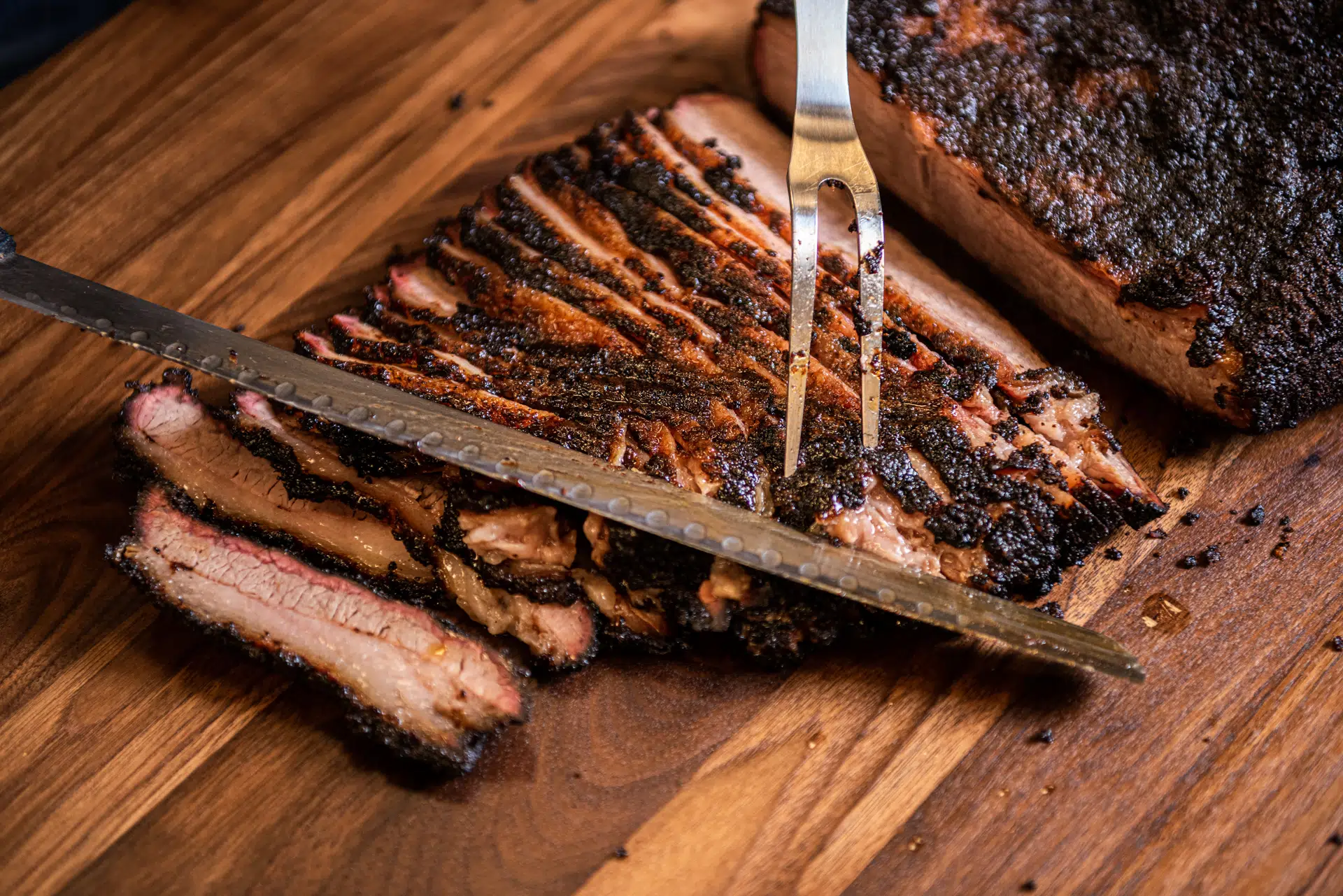
This is the brisket that put Chef Gregory on the competition circuit map. After years of refining the technique at regional and national BBQ championships, he has distilled the process into a repeatable system that any dedicated home cook can master — given patience, quality meat, and the right wood.